World’s Smallest Monkey: Meet the Pygmy Marmoset
Have you ever seen a monkey small enough to fit in the palm of your hand? The pygmy marmoset is a fascinating little primate and is widely recognized as the world’s smallest monkey. Its tiny size has also earned it popular nicknames such as “finger monkey” and “pocket monkey.”
Found in the forests of South America, this remarkable animal has several unusual adaptations that help it survive in the wild.
How Small Is the Pygmy Marmoset?
The pygmy marmoset is incredibly small compared with most other monkeys. An adult typically weighs around 100 grams, although individual animals can vary.
Its body measures roughly 12–16 centimetres in length, while its long tail can be longer than its body. The tail helps the monkey maintain balance as it moves between branches.
The term “finger monkey” is an informal nickname rather than the animal’s scientific name. It refers to the pygmy marmoset’s exceptionally small size and ability to grip small branches and objects.
Where Does the World’s Smallest Monkey Live?
Pygmy marmosets are native to the Amazon Basin in South America. They are found in parts of countries including Brazil, Peru, Colombia, Ecuador and Bolivia.
These tiny monkeys spend much of their lives in trees. Their small bodies, sharp claws and long tails help them navigate the dense vegetation of tropical forests.
They are particularly associated with forests near rivers and areas containing trees that provide suitable feeding opportunities.

image source : https://community.ebay.com/
What Does a Pygmy Marmoset Eat?
One of the most interesting things about the pygmy marmoset is its unusual diet.
Unlike many monkeys that rely heavily on fruit, pygmy marmosets are especially adapted to feeding on tree sap and other plant exudates.
They use their specialized teeth to make small holes in tree bark, allowing them to access the nutritious substances beneath the surface.
They also eat fruit, insects, spiders and other small food sources, giving them a varied diet when conditions allow.
Pygmy Marmosets Are Social Animals
Despite their tiny size, pygmy marmosets have complex social lives.
They generally live in small family groups, where members cooperate and communicate with one another. Living in groups can provide protection from predators and help with caring for young animals.
These monkeys communicate using different vocalizations, body movements and scent-marking behaviors.
Their small size doesn’t mean they are completely harmless. Like other wild primates, they can become defensive when threatened or stressed and may bite.
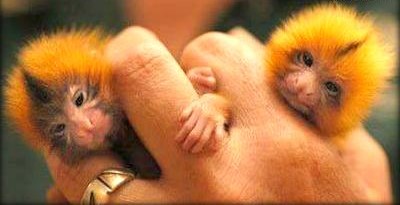
image source : http://factrange.com
Why Are They Called Finger Monkeys?
The name “finger monkey” became popular because of the pygmy marmoset’s tiny body and ability to hold onto small objects.
You may also see them described as pocket monkeys online. However, the proper common name is pygmy marmoset.
Their adorable appearance has made them popular in photographs and videos, but their cute appearance shouldn’t be mistaken for easy pet care.
Can You Keep a Pygmy Marmoset as a Pet?
Pygmy marmosets are wild animals, not domesticated pets. They have specialized dietary, social and environmental needs that can be difficult to meet in a household.
Keeping exotic primates is also restricted or regulated in many places, so anyone considering ownership would need to understand the applicable laws and welfare requirements.
A Tiny Monkey With an Extraordinary Lifestyle
The world’s smallest monkey may be tiny, but its lifestyle is remarkable. From feeding on tree sap to living in family groups and navigating the Amazon rainforest, the pygmy marmoset is perfectly adapted to its environment.
Its size may be what first catches your attention, but its behavior and survival skills make this tiny primate truly fascinating.
Small in size, extraordinary in nature—the pygmy marmoset proves that some of the world’s most fascinating animals don’t have to be big to make a big impression.
REFERENCES:
World’s Weirdest: Smallest Monkey Turf War
Pygmy Marmoset – The Smallest Monkey